How to Buy a House in Kenya and Arrange Financing

For a foreign buyer, the right property title matters as much as the right home. You can hold a leasehold title in Kenya for up to 99 years, while agricultural land is restricted under Section 9(c) of the Land Control Act. Understanding how to buy a house in Kenya means weighing these ownership rules alongside your plans, offer terms, and financing approach.
It’s natural to focus first on the property itself. Yet learning how to buy a house in Kenya also means making sound decisions between finding a home and completing the transfer: reviewing the title, negotiating the offer, agreeing the sale terms, and planning mortgage finance. Consider how your funding will fit the transaction before you commit.
This guide explains how foreign buyers can approach a purchase, what distinguishes freehold from leasehold, and how to make and negotiate an offer. It also covers key checks, sale agreements, and financing decisions to help you proceed with greater clarity.
Key Takeaways
- Assess the property’s title and land classification early, since they shape the ownership options available to a foreign buyer.
- Compare freehold and leasehold rights, including the ongoing obligations attached to leasehold property.
- Review the Letter of Offer carefully and negotiate its terms before moving to the binding sale agreement.
- Plan your deposit and mortgage application around the agreement and completion process to keep financing aligned with the purchase.
Buying property in Kenya as a foreigner
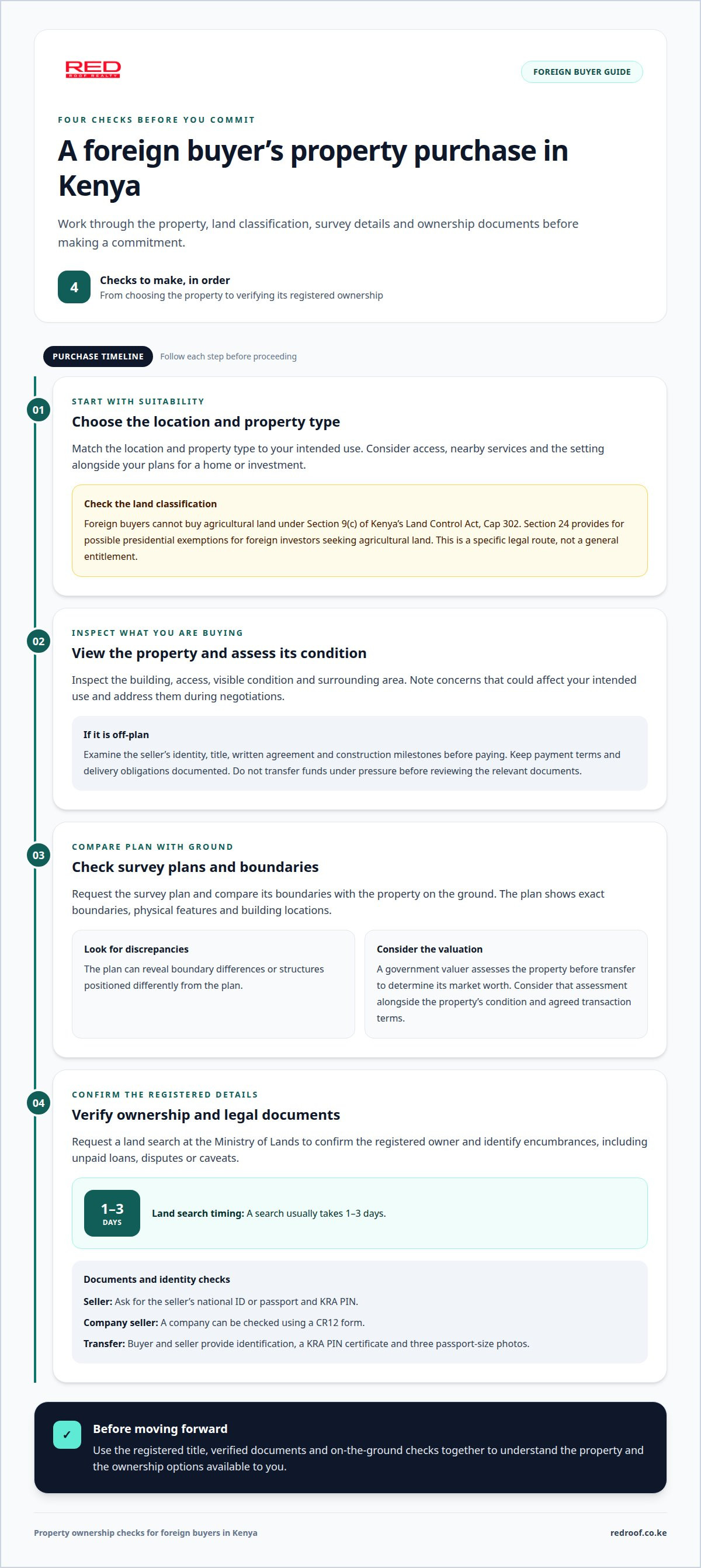
Foreign buyers can purchase property in Kenya, but land classification and title type matter. Follow these steps before making a commitment.
-
Choose a Location and Property Type
Match the location and property type to your intended use. Consider access, nearby services, and the setting alongside your plans for a home or investment. Foreign buyers cannot buy agricultural land under Section 9(c) of Kenya’s Land Control Act, Cap 302. Section 24 provides for possible presidential exemptions for foreign investors seeking agricultural land. Treat this as a specific legal route, not a general entitlement.
-
View and Inspect the Property
Arrange a viewing and inspect the building, access, visible condition, and surrounding area. Note concerns that could affect your intended use, then address them during negotiations. For off-plan property, examine the seller’s identity, title, written agreement, and construction milestones before paying. Keep payment terms and delivery obligations documented. Do not transfer funds under pressure before reviewing the relevant documents.
-
Check Survey Plans and Boundaries
Request the survey plan and compare its boundaries with the property on the ground. The plan shows exact boundaries, physical features, and building locations. It can reveal boundary discrepancies or structures positioned differently from the plan. A government valuer assesses property before transfer to determine its market worth. Consider that assessment alongside the property’s condition and the agreed transaction terms.
-
Verify Ownership and Legal Documents
Request a land search at the Ministry of Lands to confirm the registered owner and identify encumbrances, including unpaid loans, disputes, or caveats. A search usually takes 1-3 days. Ask for the seller’s national ID or passport and KRA PIN; a company seller can be checked using a CR12 form. Buyer and seller provide identification, a KRA PIN certificate, and three passport-size photos for transfer.
Freehold and leasehold ownership
Compare the title type before deciding whether a property suits your plans. For foreign buyers, leasehold ownership has a maximum term of 99 years.
- Read the title to identify whether the property is freehold or leasehold. Freehold ownership grants ownership of the land without ground rent. Leasehold ownership grants rights for a defined term, so the title’s terms shape the ownership you receive. Do not rely on a property description alone: the registered title sets out the tenure.
- For a leasehold property, establish the length of the granted term and understand its renewal conditions. Kenyan leasehold rights are typically granted for 99 years, and foreign buyers may hold leasehold titles for a maximum of 99 years. Future renewals are subject to conditions. A stated term is not the same as a promise of automatic renewal, so account for that distinction in your decision.
- Include leasehold obligations in your ownership assessment. Annual ground rent is usually payable for leasehold property in Kenya, unlike freehold property. Consider how this recurring obligation fits your plans for using or holding the property. Also distinguish ground rent from land rates: these are separate obligations, and both can affect the documents needed for a leasehold transaction.
- Ask about the Land Clearance Certificate during your leasehold review. Outstanding land rates or rent must be cleared before the certificate can be obtained. Unpaid obligations therefore affect the transaction, not just future administration. Review the lease terms, rent position, and clearance documents together before proceeding. For freehold, focus on confirming the registered tenure and any obligations recorded against the title.
Sale agreements and mortgage financing
Align your financing with the agreement before signing. In Kenya, the signed sale agreement makes the transaction legally binding.
-
Arrange Mortgage Financing
Discuss your financing needs with lenders early, then plan the deposit and repayments together. Lenders assess whether your income can support repayments alongside existing commitments. Compare each proposed rate and repayment schedule with your budget and intended ownership period.
Set out how mortgage funds will support the purchase, including when they are needed under the agreement’s completion terms. Account for lender processing and the documents required for your application. A clear financing plan helps identify any funding gap early, so you can decide how to address it before signing.
-
Review the Sale Agreement and Deposit
Ask your advocate to review the sale agreement before you sign. Confirm the property description, payment arrangements, completion date, and each party’s obligations. A Letter of Offer is subject to contract and is not itself legally binding. The transaction becomes legally binding once the sale agreement is signed.
Read the deposit provisions carefully, including when payment is due, where it must be held, and what happens if there are delays or the transaction does not proceed. Deposits are usually paid into an advocate’s client account or trusted escrow. Follow the written payment instructions and keep a clear record.
- Coordinate signing, deposit payment, and mortgage arrangements. A standard Kenyan property sale generally takes 90 days from signing the sale agreement to completion. Use the agreement’s dates to organise funding and transfer steps. Address financing timelines before signing, rather than assuming funds will be released in time.
- Keep signed documents and payment records together. Ensure every record matches the agreement and identifies the stated recipient. The sale agreement records the purchase terms, while lender documents set out the financing arrangement. Reviewing them together helps you track obligations from signature through completion.
Making an offer and negotiating
A considered offer does more than state your proposed terms. It sets a clear basis for negotiation before the Letter of Offer and sale agreement.
- Set your priorities before submitting an offer. Separate essential terms, such as the property included, from points you could negotiate. Use the viewing and title information to identify specific concerns, such as repairs or a boundary detail. A precise rationale gives the seller something concrete to consider instead of an unsupported request to change the terms.
- Put your proposed terms in writing and review each detail. State the property, proposed purchase terms, deposit arrangements, and any conditions you want recorded. Make sure the offer reflects your financing plan and intended completion arrangements. Do not rely on verbal assurances about repairs, included fittings, or handover; ask for agreed details to appear in the written documents.
- Negotiate the whole arrangement, not just one figure. If the seller resists a change, consider whether another term could address your concern, such as handover timing or documented repairs. Keep each revision clear, dated, and shared with the other party. This creates a traceable record of what changed and what remains open for agreement.
- Track the Letter of Offer deadline and respond promptly. The typical turnaround period for signing one in Kenya is 7 to 14 days from its issue. Use that window to settle outstanding terms and review the document before signing. A Letter of Offer is subject to contract, so continue the agreed process toward the sale agreement rather than treating the offer as the final contract.
For a more informed starting point, plan your property search around your priorities and intended terms.
Red Roof Realty
Red Roof Realty can help you move from property research to a considered purchase. Its residential property sales service connects your priorities with suitable options, while market insights and negotiation guidance help you assess opportunities and shape an informed offer. Property valuation can also help you understand a property’s assessed market worth as you make your decision. For buyers weighing location, title type, and intended use, a structured search helps clarify next steps without losing sight of important details.
Contact Red Roof Realty to discuss your property requirements and plan your next steps towards a purchase.
Take your next step with clarity
Turn your priorities into a practical purchase plan. Define the location, ownership structure, and financing approach that suit your circumstances, then keep your decisions aligned as the transaction progresses. Understanding how to buy a house in Kenya means more than selecting a property; it also means choosing terms and support that fit your ownership plans.
Red Roof Realty brings property market insight and negotiation guidance to residential property sales. Its experience in commercial leasing and property management can also support your property needs beyond a home purchase. Whether you are buying for personal use or planning a broader property portfolio, the team can offer a considered point of contact as your requirements develop.
Set out what matters most in your search, then start a conversation about buying a property. A clear brief can help shape a focused next step and bring your plans closer to a considered decision.
Frequently Asked Questions
What are the steps to buying a house in Kenya?
Begin by defining your preferred location, property type, and intended use. Shortlist homes in Nairobi, Mombasa, or Kiambu, then assess each property’s title and condition. Once you select a suitable option, make a written offer and negotiate its terms. Proceed to a reviewed sale agreement, coordinate financing, and complete the transfer requirements before taking possession.
What is the average house price in Nairobi and other Kenyan cities?
There is no single average that usefully represents different homes across Kenya. A Nairobi apartment, a family house in Kiambu, and a coastal property in Mombasa are not like-for-like comparisons. Compare properties with similar size, condition, tenure, and location. In Eldoret and Kisumu, as elsewhere, nearby services and intended use also determine how relevant a comparison is.
How much deposit and additional costs should buyers budget for in Kenya?
Plan for the deposit stated in your offer and sale agreement, then set aside funds for transaction expenses. These may include stamp duty, legal services, valuation, and searches or surveys, depending on the property and purchase. The amounts depend on the transaction details. Map each expected payment against its due date to keep your deposit, mortgage funds, and completion arrangements aligned.
What mortgage options, interest rates, and eligibility requirements do Kenyan banks offer?
Kenyan banks offer home-purchase financing, but products and rates differ between lenders. Banks assess whether your income can support proposed repayments alongside existing commitments. Your deposit, loan amount, repayment period, and the property offered as security can affect the assessment. Compare each lender’s written repayment schedule and terms with your budget before committing to a sale agreement.
What taxes and fees apply to property purchases in Kenya, including stamp duty?
Stamp duty applies, with its basis tied to the Government Valuer’s assessment or the agreed purchase price, whichever is higher. The applicable rate depends on the property’s location and classification. Both parties need a KRA PIN for stamp duty processing. Legal fees follow the scale in the Advocates Remuneration Amendment Order, 2014; a seller may also owe Capital Gains Tax when the sale makes a profit.
Can foreigners buy houses or land in Kenya, and what restrictions apply?
Foreign buyers may acquire Kenyan property, but agricultural land has a distinct restriction. Section 9(c) of the Land Control Act, Cap 302, bars foreigners and privately owned companies without exclusively Kenyan shareholders from buying or owning agricultural land. Section 24 provides for possible presidential exemptions for foreign investors. A home’s land classification and title structure therefore matter before you proceed with an offer.
Frequently Asked Questions
Begin by defining your preferred location, property type, and intended use. Shortlist homes in Nairobi, Mombasa, or Kiambu, then assess each property’s title and condition. Once you select a suitable option, make a written offer and negotiate its terms. Proceed to a reviewed sale agreement, coordinate financing, and complete the transfer requirements before taking possession.
There is no single average that usefully represents different homes across Kenya. A Nairobi apartment, a family house in Kiambu, and a coastal property in Mombasa are not like-for-like comparisons. Compare properties with similar size, condition, tenure, and location. In Eldoret and Kisumu, as elsewhere, nearby services and intended use also determine how relevant a comparison is.
Plan for the deposit stated in your offer and sale agreement, then set aside funds for transaction expenses. These may include stamp duty, legal services, valuation, and searches or surveys, depending on the property and purchase. The amounts depend on the transaction details. Map each expected payment against its due date to keep your deposit, mortgage funds, and completion arrangements aligned.
Kenyan banks offer home-purchase financing, but products and rates differ between lenders. Banks assess whether your income can support proposed repayments alongside existing commitments. Your deposit, loan amount, repayment period, and the property offered as security can affect the assessment. Compare each lender’s written repayment schedule and terms with your budget before committing to a sale agreement.
Stamp duty applies, with its basis tied to the Government Valuer’s assessment or the agreed purchase price, whichever is higher. The applicable rate depends on the property’s location and classification. Both parties need a KRA PIN for stamp duty processing. Legal fees follow the scale in the Advocates Remuneration Amendment Order, 2014; a seller may also owe Capital Gains Tax when the sale makes a profit.
Foreign buyers may acquire Kenyan property, but agricultural land has a distinct restriction. Section 9(c) of the Land Control Act, Cap 302, bars foreigners and privately owned companies without exclusively Kenyan shareholders from buying or owning agricultural land. Section 24 provides for possible presidential exemptions for foreign investors. A home’s land classification and title structure therefore matter before you proceed with an offer.