
Off-Plan vs Completed Apartments: Compare Prices and Payment Plans

For off plan versus completed apartments in Nairobi, off-plan suits you if you can wait through construction and prefer payments spread over time, while a completed apartment offers a finished home you can inspect and occupy or rent sooner. A typical off-plan construction period in Kenya is 18-36 months, and delays can extend the wait, so the choice rests on whether staged payments and a future handover outweigh the value of immediate use and greater visibility of the finished property. This comparison explains how payment structures, construction and developer risks, and completion timelines shape the decision, helping you match each option to your investment plans and tolerance for waiting.
Key Takeaways
- Assess a developer’s track record and project progress to understand the risks behind an off-plan commitment.
- Factor in the rental-income gap when deciding whether a completed apartment better fits your investment plans.
- Compare the off-plan instalment schedule with your cash flow before committing to a purchase.
- Use project scale and construction milestones to judge whether the stated handover timeline suits your plans.
Construction and developer risks
With off-plan apartments, your payment schedule and handover depend on construction progress. With completed units, you can assess the finished building before buying. Before committing, review the project approvals, construction documents, and the developer’s record of delivering previous developments.
Deposits and Construction Milestones
Off-plan payment plans usually start with a deposit, followed by instalments linked to construction milestones. Read the milestones and due dates together so you understand how payments relate to work underway. A completed unit has no construction-stage payment schedule, and you can inspect its condition before purchase instead of relying on plans for a future finish.
Project Size and Build Duration
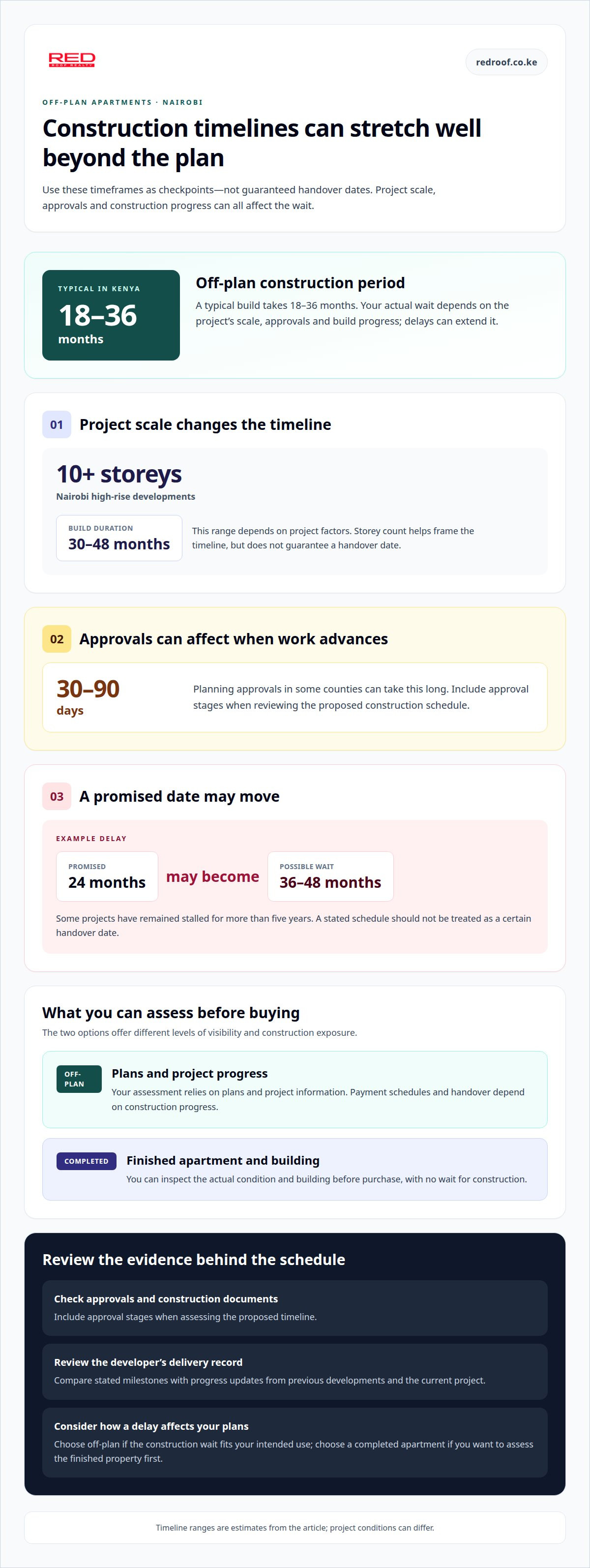
Project scale helps frame the construction timeline, but it does not establish a guaranteed handover date. Nairobi high-rise developments of 10 or more storeys can take 30 to 48 months, depending on project factors. Planning approvals in some counties can take 30 to 90 days, which can affect when construction advances. Include approval stages in your review of the proposed schedule.
Delays and Developer Reliability
Construction delays are a common concern for off-plan buyers in Nairobi. A project promised for delivery in 24 months may take 36-48 months, and some projects have remained stalled for more than five years. Review the developer’s previous projects and compare stated milestones with progress updates. Design changes and developer uncertainty can also affect the outcome, so consider how a delayed handover would alter your plans.
| Option | Payment structure | Construction exposure | What you can assess |
|---|---|---|---|
| Off-plan | Deposit and milestone instalments | Construction and delivery risks | Plans and project progress |
| Completed | No build-stage instalments | No wait for construction | Finished apartment and building |
Choose off-plan if the construction wait suits your plans. Choose a completed unit if you want to assess the finished property before purchase.
Off-Plan vs Ready Apartments: Which Is Better If You Want to Invest in Nairobi Real Estate?
For investors comparing off plan versus completed apartments, the key difference is when the property can serve its intended purpose. An off-plan apartment is still under construction, while a completed unit is finished and can be inspected before purchase. Consider whether you prioritise assessing a property now or investing with a longer horizon.
You can apply for a mortgage to buy an off-plan apartment in Kenya, but approval and terms depend on the lender, borrower, and project. Developer instalments may also be tied to construction milestones, while a completed purchase has no build-stage instalment schedule. Consider how each financing route fits your cash flow and purchase timeline.
A completed apartment may suit investors who want to prepare a property for rental sooner. You can assess the actual layout, condition, and building before deciding how to present it to prospective tenants. This can also suit an investment plan that depends on using the apartment soon after purchase.
Off-plan buying may suit investors planning for future ownership rather than immediate income. Weigh the intended use against the wait for handover. If you plan to live in the apartment, consider whether the expected completion date fits your schedule. If you plan to rent it out, factor in the time before it is ready when considering your income strategy.
In Nairobi, location and tenant demand matter alongside whether an apartment is off-plan or completed. Consider its intended audience and use, and how long you can hold it before it needs to serve its purpose. The decision comes down to fit: choose the option that matches your cash flow, intended use, and investment timeline.
Off-plan purchase prices and payment plans
For an off-plan purchase, assess how the payment plan is documented and timed, not just how it is presented in a sales discussion. Set out the reservation date, agreement date, scheduled payment dates, and conditions attached to each milestone. This creates a clear sequence to compare with the project’s stated progress.
Deposits and Staged Payments
Treat the payment plan as a calendar of commitments. Identify what triggers each instalment, how the developer will communicate progress, and what the agreement says if a milestone shifts. This helps you understand how construction updates relate to your obligations, without assuming every project follows the same schedule.
In Kenya, the sale agreement for an off-plan purchase is typically signed within 14-30 days of reservation. Use that period to read the agreement alongside the payment schedule and proposed handover terms. Note any dates or conditions that differ between the documents, so the sequence is clear before you proceed.
Upfront Costs
Before reserving, clarify what the reservation covers, how long it remains valid, and how it relates to the sale agreement. The documents should explain the steps from reservation to purchase, including when each decision or signature is expected. Keep a copy of the agreed schedule and record any revisions against the relevant project milestone.
With a completed apartment, you can inspect the finished unit and consider its condition before deciding. For an off-plan home, your assessment relies on plans, project information, and agreed documents. Compare how much you can evaluate before committing and whether the documented schedule fits your plans.
Off-plan apartments in Nairobi may offer installment-based payments and lower upfront costs, while off-plan property deposits in Kenya are typically 10-30% of the purchase price.
Typical Nairobi off-plan completion timelines
A typical off-plan construction period in Kenya is 18-36 months, but your actual wait depends on project scale, approvals, and build progress. In Nairobi, distinguish the construction timeline from the date sales begin: a schedule measured from the first purchase can add 3 to 6 months before handover.
Project size offers a useful first guide. Small to mid-size developments of 20 to 60 units typically take 12 to 24 months from groundbreaking to practical completion. Large developments of 60 to 200+ units typically take 24 to 36 months. High-rise projects of 10 or more storeys can take 30 to 48 months, depending on project factors.
Construction phases can overlap, so treat milestone dates as a sequence rather than separate promises. A typical Nairobi project may follow this pattern:
- Months 1 to 6: Pre-construction activity, measured from the first sale.
- Months 3 to 8: Foundations and substructure.
- Months 6 to 18: Superstructure and floor slabs.
- Months 14 to 22: Roofing and the external envelope.
- Months 18 to 30: Internal fit-out and finishes.
- Months 24 to 36: Practical completion and handover.
Planning approvals can also affect when work advances; in some counties, approvals take 30 to 90 days. Nairobi’s rainy seasons, April to June and October to December, can affect construction work. These factors make the stated completion date a planning reference, not a substitute for tracking progress.
For your financial plan, align expected handover with when you need to occupy, lease, or earn rental income. In Westlands or Kilimani, demand may support an investment strategy, but it does not shorten construction. Before committing, compare the projected timeline with your cash flow and intended use of the estate. Explore Nairobi apartment opportunities to consider which timing fits your plans.
Red Roof Realty
Red Roof Realty helps you compare apartment options with your intended use, preferred timing, and investment priorities in mind. Its residential property sales service can support your search for an off-plan or completed home. If you plan to rent out the apartment, the company also offers property management. Consider location, property type, and ownership goals together when choosing.
If you are weighing construction timelines against immediate occupancy, or rental income against a longer-term purchase, Red Roof Realty can help you explore suitable residential options in Nairobi and across Kenya. Choose based on the factors that matter most to your plans.
Contact Red Roof Realty to discuss your apartment search.
Make Your Next Property Move With Clarity
Your decision on off plan versus completed apartments should reflect how you want the property to serve you over time. Consider whether you need a home to occupy, an investment to rent, or an option that fits a broader portfolio. With that purpose clear, you can assess suitable properties with greater focus.
Red Roof Realty brings property market insight to decisions involving residential property sales, commercial leasing, and property management. Its services can help you consider how an apartment fits your wider property plans, whether you are buying for personal use or rental investment.
Take the next step at your own pace. Contact Red Roof Realty to discuss your property goals and explore a considered path forward.
Frequently Asked Questions
Is 2026 a Good Time for Off-Plan?
2026 may suit you if your investment horizon allows for construction time and you can manage without immediate use or rent. The decision depends on your planned holding period, income needs, and comfort with project delivery risk. In Nairobi, assess each development on its own progress and location rather than assuming market appreciation will offset a delayed handover.
What Is the Difference Between Off-Plan and Completed Apartments in Kenya?
An off-plan apartment is purchased before construction is complete; a completed apartment is already built. This affects how much of the finished property you can assess before buying and when you can plan to occupy it. For example, if you need a home for a specific move-in date, a completed unit gives you a clearer basis for planning.
What Legal Checks Should Buyers Make Before Purchasing an Off-Plan Apartment in Kenya?
Have an independent advocate review the sale agreement, instalment schedule, and handover provisions. Review the developer’s previous projects and the project’s approval and construction documentation. The agreement should also state a defects liability period after handover; a period of 6-12 months is advised. Clear documents help define payment milestones and what happens at handover.
What Are the Risks of Construction Delays or Non-Completion for Off-Plan Apartments in Kenya?
Delays can postpone occupation and rental plans, while non-completion can leave your capital committed without a finished apartment. Some Nairobi projects have remained stalled for more than five years. A project initially promised for delivery in 24 months may take 36-48 months. Consider whether your plans can absorb a longer wait before committing.
How Do Buyers Inspect and Verify the Condition and Title of a Completed Apartment in Kenya?
Arrange a physical inspection of the apartment and building, then have an independent advocate review the title and sale documents. During the visit, assess the visible condition, shared areas, amenities, and surrounding environment. Compare the property with the transaction documents, and note any condition issues for review before proceeding.
Frequently Asked Questions
2026 may suit you if your investment horizon allows for construction time and you can manage without immediate use or rent. The decision depends on your planned holding period, income needs, and comfort with project delivery risk. In Nairobi, assess each development on its own progress and location rather than assuming market appreciation will offset a delayed handover.
An off-plan apartment is purchased before construction is complete; a completed apartment is already built. This affects how much of the finished property you can assess before buying and when you can plan to occupy it. For example, if you need a home for a specific move-in date, a completed unit gives you a clearer basis for planning.
Have an independent advocate review the sale agreement, instalment schedule, and handover provisions. Review the developer’s previous projects and the project’s approval and construction documentation. The agreement should also state a defects liability period after handover; a period of 6-12 months is advised. Clear documents help define payment milestones and what happens at handover.
Delays can postpone occupation and rental plans, while non-completion can leave your capital committed without a finished apartment. Some Nairobi projects have remained stalled for more than five years. A project initially promised for delivery in 24 months may take 36-48 months. Consider whether your plans can absorb a longer wait before committing.
Arrange a physical inspection of the apartment and building, then have an independent advocate review the title and sale documents. During the visit, assess the visible condition, shared areas, amenities, and surrounding environment. Compare the property with the transaction documents, and note any condition issues for review before proceeding.